Winegrowers Supplies
- Vine variety information
Vidoc
(originally known as IJ 58)Mother: Regent
Father: known as VRH/Mtp 3082-1-42, an intergeneric cross between Vitis vinifera x Muscadinia rotundifolia. Bred by INRA at Montpellier.
It contains genes of Aubun, Cabernet Sauvignon, Garnacha Tinta and Merlot, as well as Muscadina.
A red Piwi/disease-resistant variety. The French term for this is ResDur.
One of the first four French varieties resistant to fungal diseases, that in 2021 have become affiliated
to the Vitis vinifera L. botanical taxon by the European Community Plant Variety Office (CPVO).
Now eligible for producing PDO wines; and on the fast track to French AOC recognition, a move that was previously unthinkable.
The cross-breeding strategy, using the technique of Marker-Assisted Selection (MAS), based on knowledge of resistance genes, is specific to the INRA ResDur program.
This has enabled selection of varieties which combine two downy mildew resistance genes and two powdery mildew resistance genes,
originating from the species Vitis rotundifolia and a group of species dominated by Vitis rupestris. These new varieties are technically neither crossings nor hybrids.
The polygenic resistance of these varieties allows huge reducion in operating costs relating to the use of plant health products;
96% reduction in the use of treatments with fungicides, herbicides and insecticides.
Year of breeding: 2000; a new project by INRA (Montpellier, France) in collaboration with the the Julius Kühn Institute (Siebeldingen, Rheinpfalz, Germany).
Country of origin: France and Germany, certified in 2017
Breeder/License holder: the French National Research Institute for Agriculture and the Environment (INRAE)
Number of clones: 1 (has the number 1268)
Year of entry into the French Varieties Register: 2018. It is on the A list and classified.
Area planted in France:
Area planted in England: none
Wine Character:
- colour: dark red
- bouquet: fruity and spicy aromas
- palate: full-bodied and balanced wines with a nice acidity.
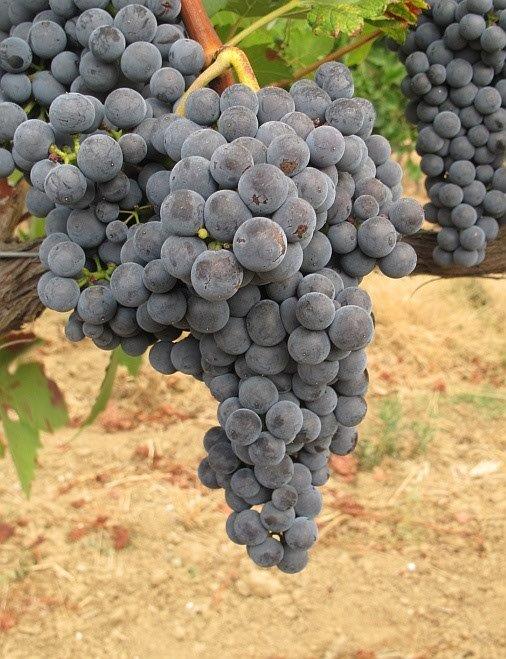
Photo by the French National Research Institute for Agriculture and the Environment (INRAE).
Time of bud-burst:
Strength of growth: vigorous, horizontal to drooping growth. So a high trellis training system is best; single or double Geneva Curtain.
Growth of side-shoots:
Flowering time:
Flowering strength:
Leaf:
- size:
- shape:
- colour:
- surface undulation:
- petiolar sinus:
Grape bunch:
- size: medium
- density: compact
Berries:
- size: small (to medium), simple flavour
- shape:
- skin colour: moderately thick skin and a soft and juicy pulp.
Time of veraison: average
Time of harvest: late, 10 days after Gamay
Grape yield: medium
Must-weight: similar to Gamay
Must-acidity: similar to Gamay
Wood ripening: growth continues late, so wood ripening can be variable.
Winter hardiness:
Wood colour:
Resistance against:
- Oidium: completely resistant
- Peronospora: completely resistant
- Botrytis: good resistance
- Roter Brenner:
- Phomopsis:
- Stem-atrophy:
- Chlorosis:
Preferred soil: it is very sensitive to magnesium deficiency.
Suitable rootstocks:
Normal stem height:
Normal row spacing:
Vine spacing in the row:
Winter Pruning: eyes/buds per sq. metre of land occupied by the plant.
Advantages:
Disadvantages: late harvest